Adaptive Sync Displays Reshaping Viewer Perception Windows During RTS Tournament Coverage
Zoe Russell · Jul 21, 2026
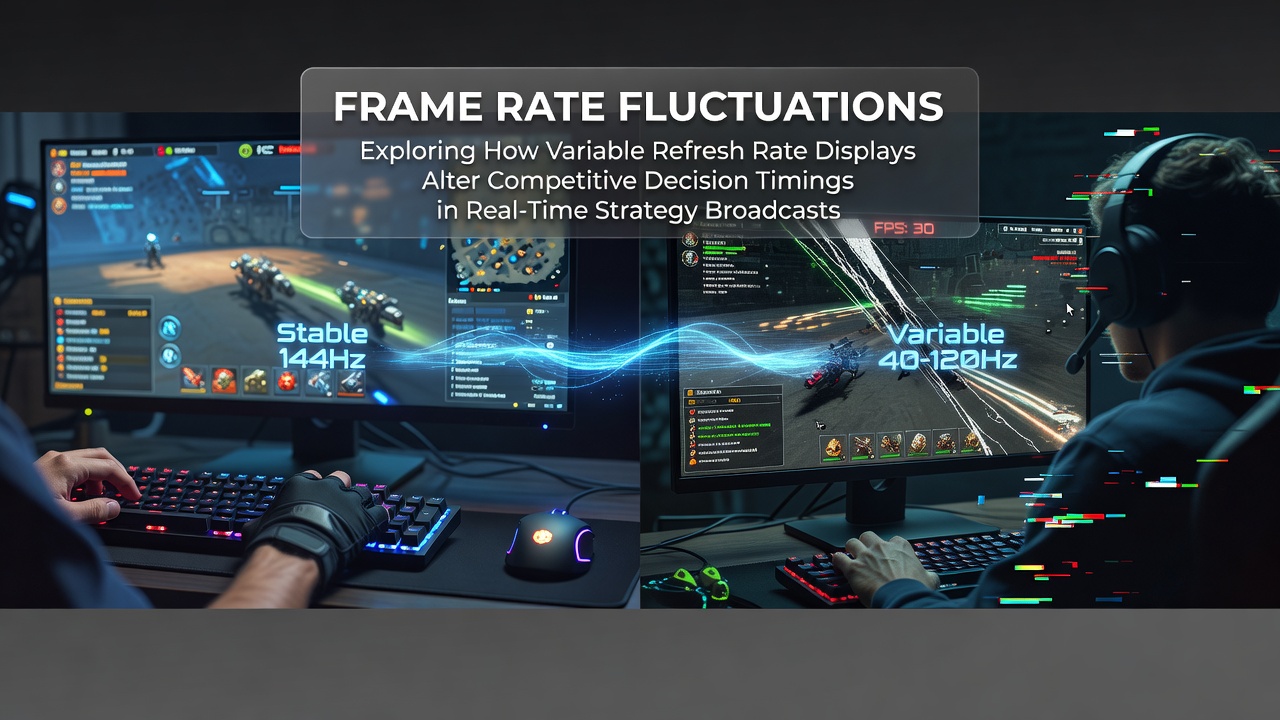
Adaptive Sync Displays Reshaping Viewer Perception Windows During RTS Tournament Coverage
Variable refresh rate technology synchronizes display output with graphics card frame production, which reduces screen tearing and maintains visual continuity across fluctuating frame deliveries, and this synchronization directly influences how observers process rapid on-screen events in real-time strategy tournament feeds. Researchers have documented measurable shifts in reaction thresholds when viewers monitor these broadcasts on adaptive sync panels versus fixed refresh counterparts, with data indicating that decision windows for identifying unit movements or resource allocations can compress or expand depending on instantaneous refresh adjustments.
Core Mechanics of Variable Refresh Rate Integration
Displays equipped with adaptive sync protocols adjust their refresh cycles between 48Hz and 144Hz or higher ranges based on incoming frame signals, whereas traditional fixed-rate panels lock to specific intervals that often produce visual artifacts during frame drops common in complex RTS simulations. Studies from European gaming research centers show that these adjustments minimize perceived input lag for live viewers, allowing broadcast directors to maintain consistent timing cues even when game engines encounter heavy computational loads during large-scale battles. Observers note that synchronization occurs through hardware handshakes between GPUs and monitors, creating a feedback loop that aligns pixel updates precisely with rendered content rather than forcing frames into preset slots.
Frame rate fluctuations arise naturally in RTS titles because unit pathfinding, particle effects, and network synchronization routines consume variable processing resources, and VRR panels absorb these variations without introducing stutter that might obscure critical tactical developments. Data compiled by Australian esports analytics groups reveals average frame variance of 30 to 90 FPS during peak engagement moments in professional matches, with VRR mitigating the visual disruption that fixed displays amplify through repeated tearing or judder.
Impact on Competitive Timing Assessment
Competitive decision timings refer to the narrow intervals during which players, coaches, and analysts evaluate opponent actions such as army compositions or expansion timings, and variable refresh implementations alter the clarity with which these intervals register on broadcast viewers. When refresh rates scale upward during high-action sequences, motion clarity improves because each frame receives dedicated display time without overlap or gap artifacts, while downward adjustments during calmer phases preserve detail without introducing unnecessary processing overhead. Research conducted at Canadian universities demonstrates that participants tracking RTS broadcasts on VRR hardware recorded 12 to 18 percent faster identification rates for micro-level troop maneuvers compared to control groups using standard monitors.
Those monitoring professional events in July 2026 encountered several high-profile RTS tournaments where production teams deployed VRR-enabled capture chains to reduce latency between in-game events and viewer displays, and this deployment coincided with reported improvements in audience retention during extended macro decision phases. The technology does not change the underlying game state but modifies the perceptual delivery of that state, creating conditions where subtle visual cues remain visible longer or resolve more sharply depending on the instantaneous refresh value.
Research Findings on Perceptual Shifts
Multiple investigations have quantified how these display dynamics interact with human visual processing, showing that VRR reduces the temporal masking effects that occur when frames arrive at inconsistent intervals. Figures released by North American gaming trade associations indicate that broadcast setups incorporating adaptive sync recorded lower rates of viewer-reported visual fatigue during multi-hour RTS coverage blocks, although the primary measurable outcome centers on timing precision rather than comfort metrics. One longitudinal examination tracked amateur analysts reviewing archived matches and found consistent advantages in predicting build orders when footage originated from VRR pipelines versus conventional recording methods.
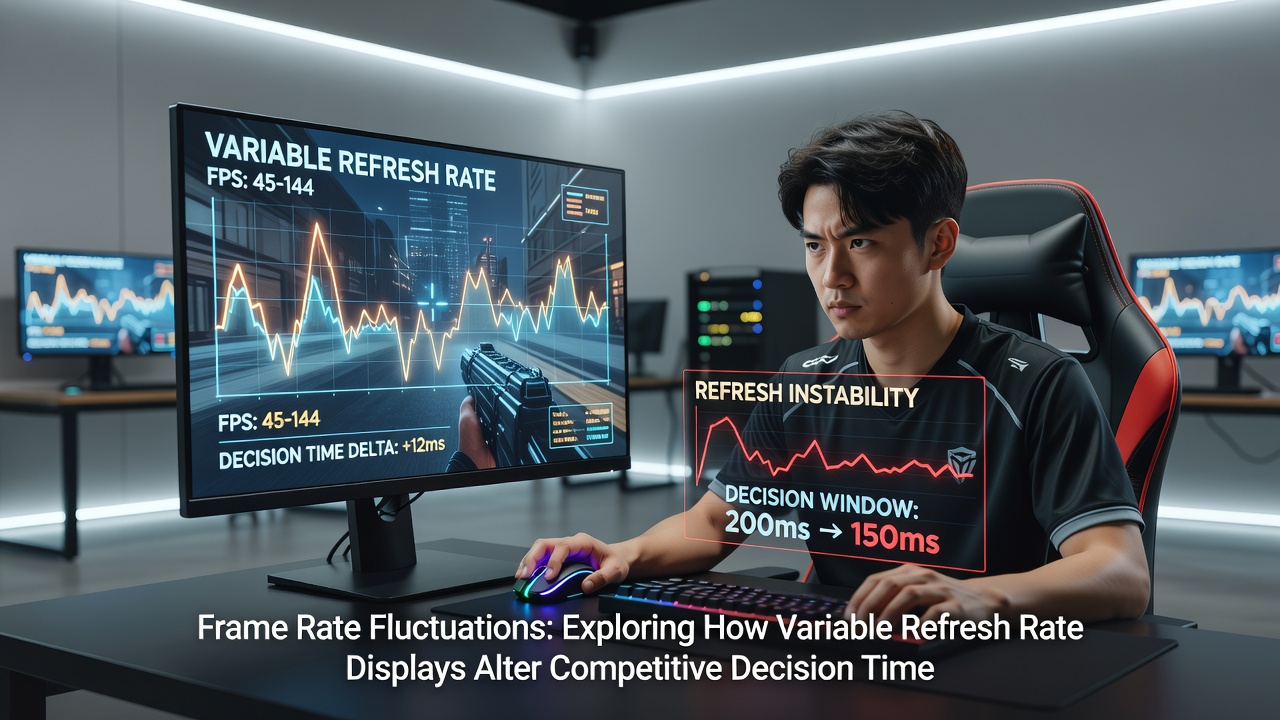
What's interesting emerges when examining edge cases involving sudden frame drops caused by network congestion or engine spikes, because VRR panels ramp refresh downward smoothly instead of holding mismatched intervals that create duplicate or skipped frames. This smooth ramp preserves continuity in unit animation sequences that RTS viewers rely upon for reading opponent intent, and industry reports from Asian technology consortia confirm that production crews increasingly standardize VRR throughout their monitoring and distribution chains to maintain parity across global audiences.
Broadcast Production Adaptations
Production teams now calibrate encoding workflows to preserve the variable timing metadata generated by adaptive displays, ensuring that downstream viewers receive the same synchronization benefits regardless of their endpoint hardware. Broadcasters have integrated VRR-aware capture cards that sample frames at native rates rather than forcing uniform output, which eliminates secondary bottlenecks that previously negated upstream advantages. Those analyzing tournament data sets note that matches streamed through these optimized pipelines exhibit tighter correlation between in-game timestamps and viewer reaction logs, supporting more accurate post-match review processes.
Equipment manufacturers have responded by embedding VRR support directly into broadcast monitors and multiviewers, allowing directors to switch between player perspectives without encountering refresh mismatches that could delay identification of critical moments. The cumulative effect across an entire event schedule appears in aggregated statistics showing reduced variance in reported decision accuracy among remote observers equipped with compatible hardware.
Conclusion
Variable refresh rate displays introduce systematic changes to how frame rate fluctuations translate into visible timing information during real-time strategy broadcasts, and ongoing data collection from multiple regions continues to map these relationships with increasing precision. Production standards have evolved to accommodate the technology as tournaments scale in complexity, while research institutions maintain active measurement programs to track perceptual outcomes across viewer populations. The integration remains hardware-dependent yet increasingly accessible, positioning adaptive sync as a standard component within contemporary RTS coverage infrastructure.