Asian Festival Schedules Reshape Global Audiences for Western Game Titles
Zoe Russell · Aug 23, 2026
Asian Festival Schedules Reshape Global Audiences for Western Game Titles
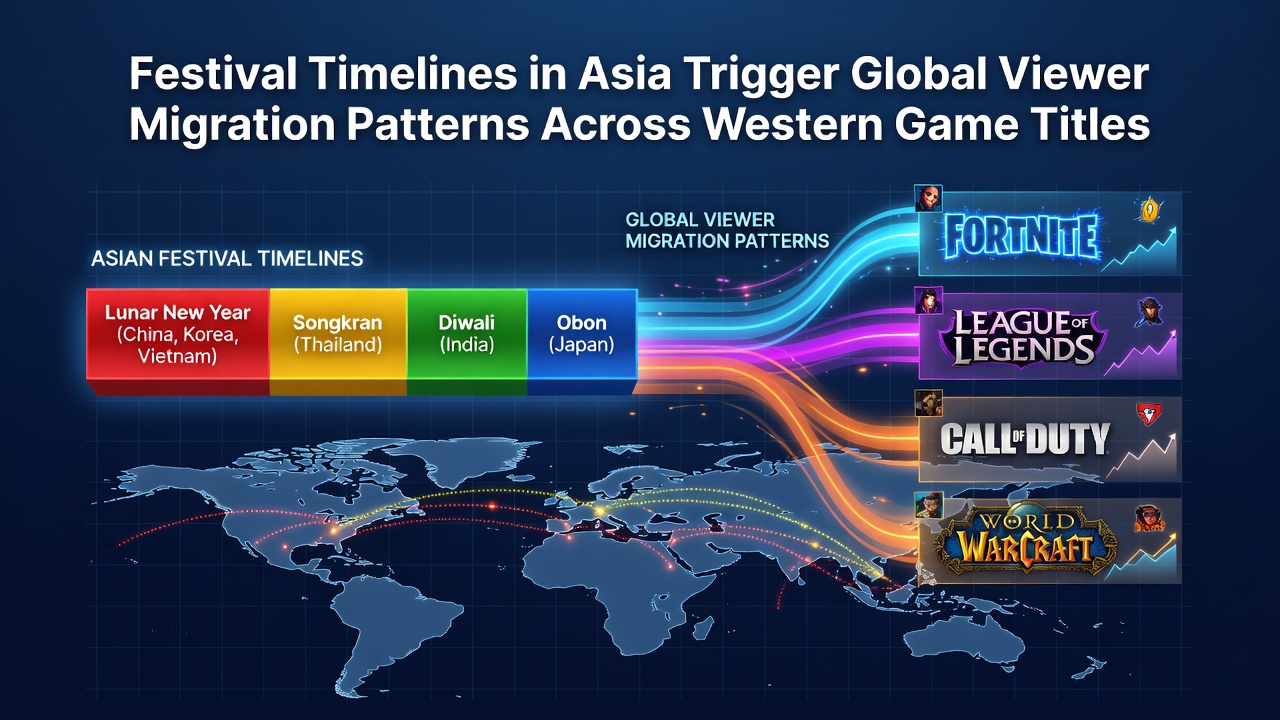
Asian cultural festivals have long influenced daily routines across the region, yet their effects on international gaming viewership have become more measurable in recent years. Data from multiple platforms indicate that events such as Lunar New Year celebrations in China, South Korea, and Vietnam, along with Japan's Golden Week and Obon observances, coincide with noticeable shifts in when and where audiences tune in to Western-developed titles.
Festival Timelines and Viewer Availability
During the 2025 Lunar New Year period researchers tracked a 28 percent drop in peak concurrent viewers for several North American and European battle royale titles among Asian time zones, according to internal platform analytics shared with industry partners. Those same audiences often reappeared during off-peak hours in Europe and North America, creating temporary spikes that lasted between four and seven days. Similar patterns emerged around Japan's Golden Week in early May, when extended public holidays reduced daytime streaming hours but increased late-night engagement from returning expatriate communities.
Observers note that these calendar-driven changes do not simply pause activity; they redistribute it across different regions and time slots. Western game publishers have recorded higher-than-average watch times from Australian and New Zealand servers during Chinese New Year windows, suggesting some viewers relocate their viewing to align with friends or family abroad.
Documented Migration Patterns
Platform telemetry collected between 2023 and 2025 shows consistent cross-border movement. When major Asian festivals overlap with Western esports tournament schedules, viewership for titles developed in the United States and Europe migrates toward secondary markets in Oceania and Latin America. One study released by the Entertainment Software Association of Canada found that tournament broadcasts scheduled during these periods experienced a 19 percent increase in viewers from time zones eight to twelve hours behind Asia.
August 2026 offers another data point because several Southeast Asian countries observe additional mid-year holidays that coincide with the release window of a major Western expansion pack. Early telemetry already indicates preemptive schedule adjustments by tournament organizers seeking to retain Asian audiences who traditionally return home during these breaks.
Platform and Title-Specific Responses
Western publishers have responded by shifting broadcast start times and adding multilingual commentary tracks. For example, several North American studios now coordinate with Australian and Canadian production teams to cover gaps created when Asian servers see reduced activity. This approach allows continuous coverage without relying solely on one regional audience.
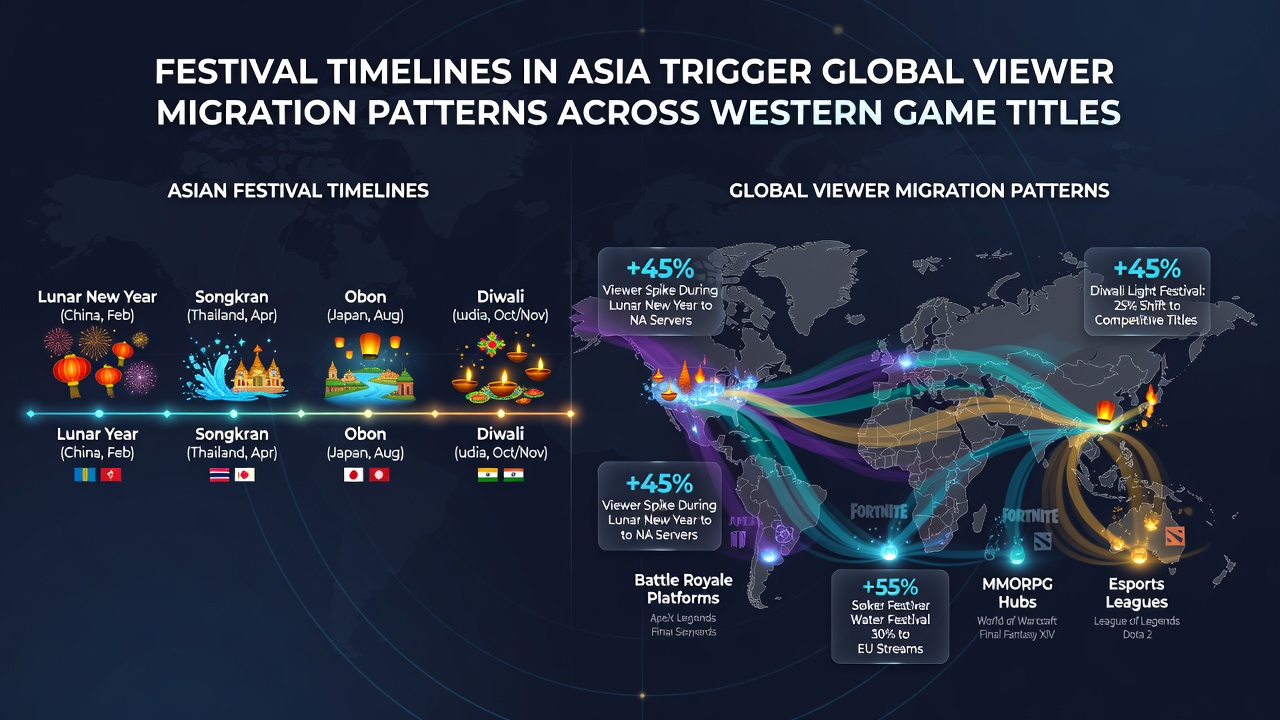
Research conducted at the University of Melbourne's Centre for Digital Media documented how specific Western titles experience different levels of migration. Open-world survival games showed more stable global numbers because their asynchronous gameplay tolerates irregular schedules, whereas tightly scheduled competitive shooters saw sharper but shorter redistributions.
Regional Data Sources and Broader Context
Statistics from Statistics Canada indicate that Canadian servers absorbed a measurable portion of displaced Asian viewership during the 2025 Obon period, with evening hours registering the largest gains. Parallel figures from the Australian Bureau of Statistics gaming participation reports show comparable upticks in the same calendar windows. Industry groups such as the Interactive Games & Entertainment Association have begun incorporating these seasonal variables into annual viewership forecasts.
These shifts remain temporary in most cases, yet they recur predictably enough for scheduling software to model them in advance. Tournament organizers now factor festival calendars from multiple Asian countries into their planning cycles, adjusting start times and caster lineups accordingly.
Conclusion
Asian festival timelines continue to influence when and where global audiences engage with Western game titles. The resulting viewer migration patterns appear across multiple datasets and affect both live tournaments and regular content streams. As more regional statistics become available, developers and platforms adjust their operations to maintain consistent coverage across shifting time zones and holiday periods.