Broadcast Analytics Shape Reward Mechanics in Team-Oriented Exploration Titles
Avery Russell · Jun 23, 2026
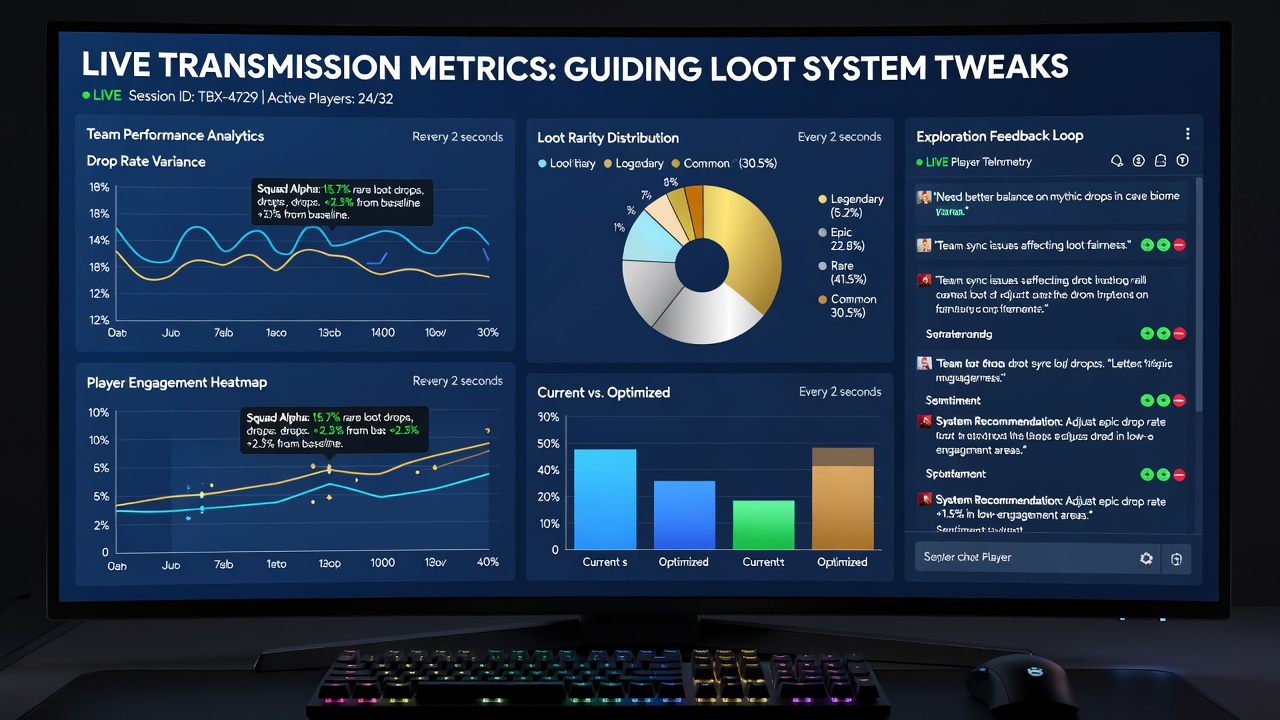
Broadcast Analytics Shape Reward Mechanics in Team-Oriented Exploration Titles
Developers track live transmission metrics to refine loot distribution rules in team-based exploration games where groups coordinate resource gathering across large maps. These adjustments respond to patterns in viewer retention, chat activity, and drop timing that emerge during extended broadcasts. Platforms record peak engagement moments when rare items appear, and studios compare those timestamps against in-game telemetry to identify imbalances in how teams receive rewards.
Core Metrics Driving Adjustments
Viewer count fluctuations during loot reveals provide one primary signal, while average watch time through entire sessions reveals another layer of insight. Data from major platforms shows that sessions featuring uneven item allocation often experience sharper drop-offs in concurrent viewers after the first thirty minutes of exploration phases. Developers monitor these trends alongside completion rates for group objectives, then test revised probability tables in subsequent updates. Studies from academic institutions have examined how chat volume spikes correlate with perceived fairness in shared drops, leading teams to recalibrate rarity thresholds for cooperative titles.
Case Examples from Recent Titles
One multiplayer survival project adjusted its shared inventory weights following analysis of June 2026 streams where viewer questions about drop consistency spiked during late-game expeditions. Another exploration-focused release incorporated aggregate broadcast data to modify how teams divide crafting materials after observing retention curves that flattened when certain players monopolized high-value finds. These changes emerged from internal reviews rather than isolated complaints, as aggregated figures revealed recurring patterns across hundreds of hours of live footage.
Industry reports from organizations such as the Entertainment Software Association highlight how real-time feedback loops now extend beyond traditional playtests. Teams integrate API pulls from streaming services to map audience reactions onto specific loot events, allowing quicker iterations than patch cycles alone would permit. What's interesting is that this approach surfaces issues like underutilized team roles in resource collection that might otherwise remain hidden in smaller test groups.
Implementation in Development Pipelines
Studios assign analysts to review highlight reels clipped automatically around high-engagement loot moments, cross-referencing those segments with server logs that log exact item assignments. This process identifies cases where certain character classes receive disproportionate rewards during joint exploration runs. Adjustments then target probability matrices or introduce new sharing mechanics, such as temporary team-wide buffs tied to collective discovery progress. Research from Canadian digital media labs has documented similar workflows, noting that titles emphasizing squad coordination benefit most from these data sources because individual performance metrics alone fail to capture group dynamics.
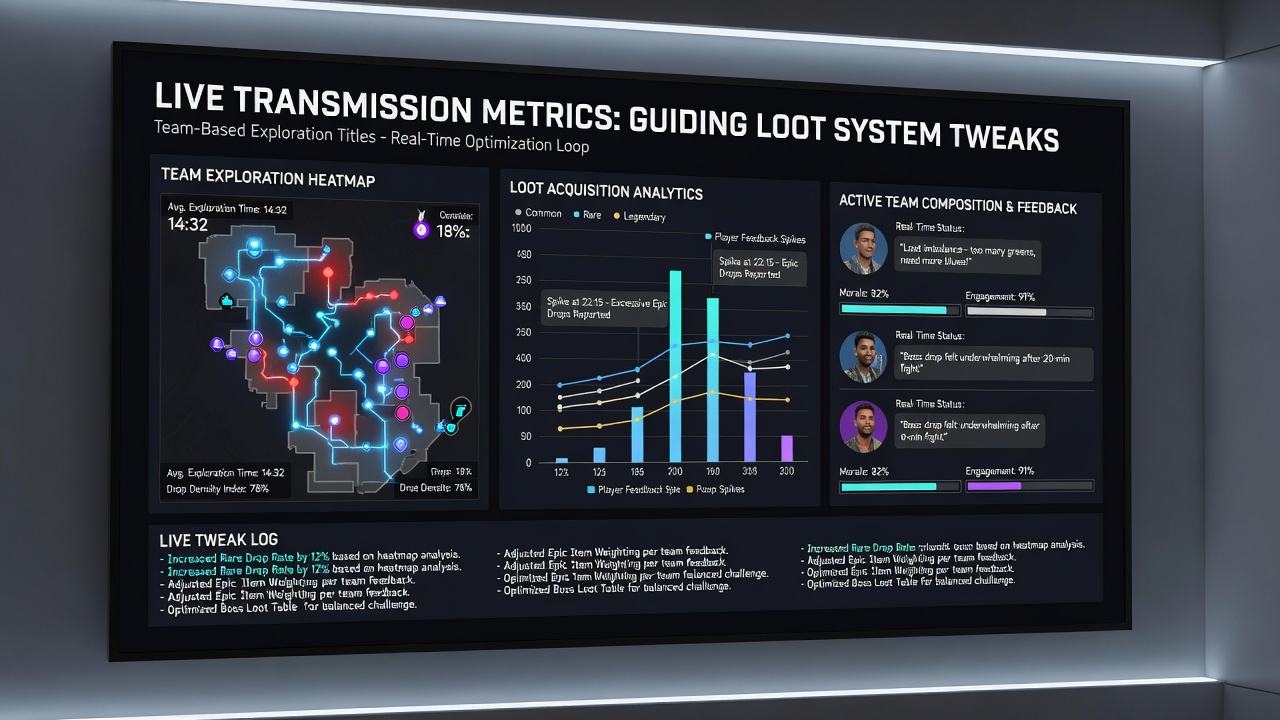
Additional refinements appear when metrics indicate regional differences in viewer preferences, prompting localized tweaks to drop tables without altering core progression for all players. European trade groups have tracked how such granular changes affect overall session lengths across multiple regions, providing comparative benchmarks that studios reference during planning phases. The ball remains in the developers' court to decide how aggressively to weight these signals against other design priorities like narrative consistency or hardware optimization.
Broader Industry Patterns
Multiple releases scheduled for late 2026 have already incorporated preliminary broadcast reviews into their loot frameworks before full launch. Observers note that games with persistent worlds show stronger correlations between live metrics and post-update retention compared to session-based experiences. This distinction arises because extended exploration campaigns generate longer data trails, making statistical significance easier to establish. Reports from university-affiliated game studies programs continue to explore these relationships through anonymized platform datasets, focusing on how chat sentiment analysis complements raw numerical indicators.
Yet the process remains iterative, as new transmission features like enhanced overlay tools or interactive viewer polls introduce fresh variables that require ongoing calibration. Teams balance these inputs against established playtesting protocols to avoid overcorrecting based on transient audience behaviors. Data indicates that successful implementations maintain core reward structures while introducing small variance adjustments that address the most visible friction points identified through live sessions.
Conclusion
Live transmission metrics continue to inform targeted refinements to loot systems across team-based exploration titles by supplying granular, time-stamped feedback on group reward interactions. This integration of broadcast analytics with traditional telemetry expands the scope of observable player behaviors, enabling developers to address distribution issues that surface primarily during extended cooperative play. As platforms evolve their data-sharing capabilities, the connection between viewer engagement patterns and in-game mechanics will likely deepen, supporting more responsive design cycles without replacing established testing methods.