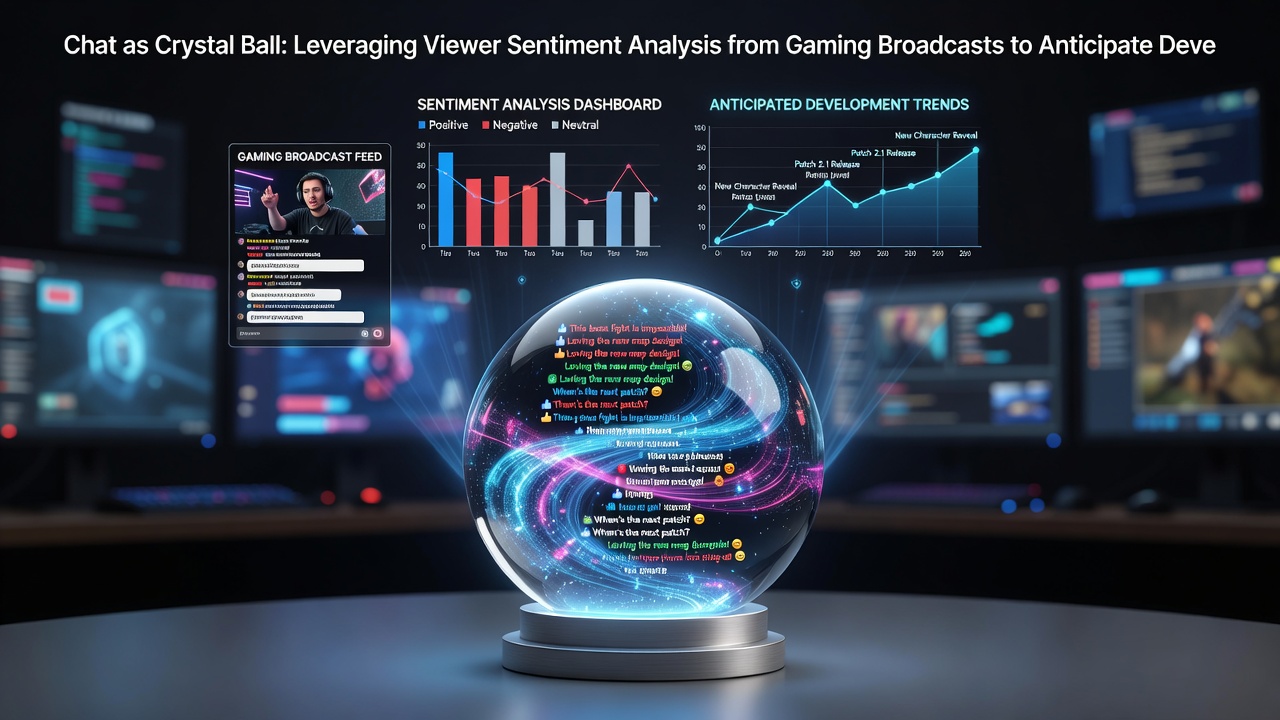
Chat as Crystal Ball: Leveraging Viewer Sentiment Analysis from Gaming Broadcasts to Anticipate Developer Interventions
Jonas Frank · Jul 16, 2026
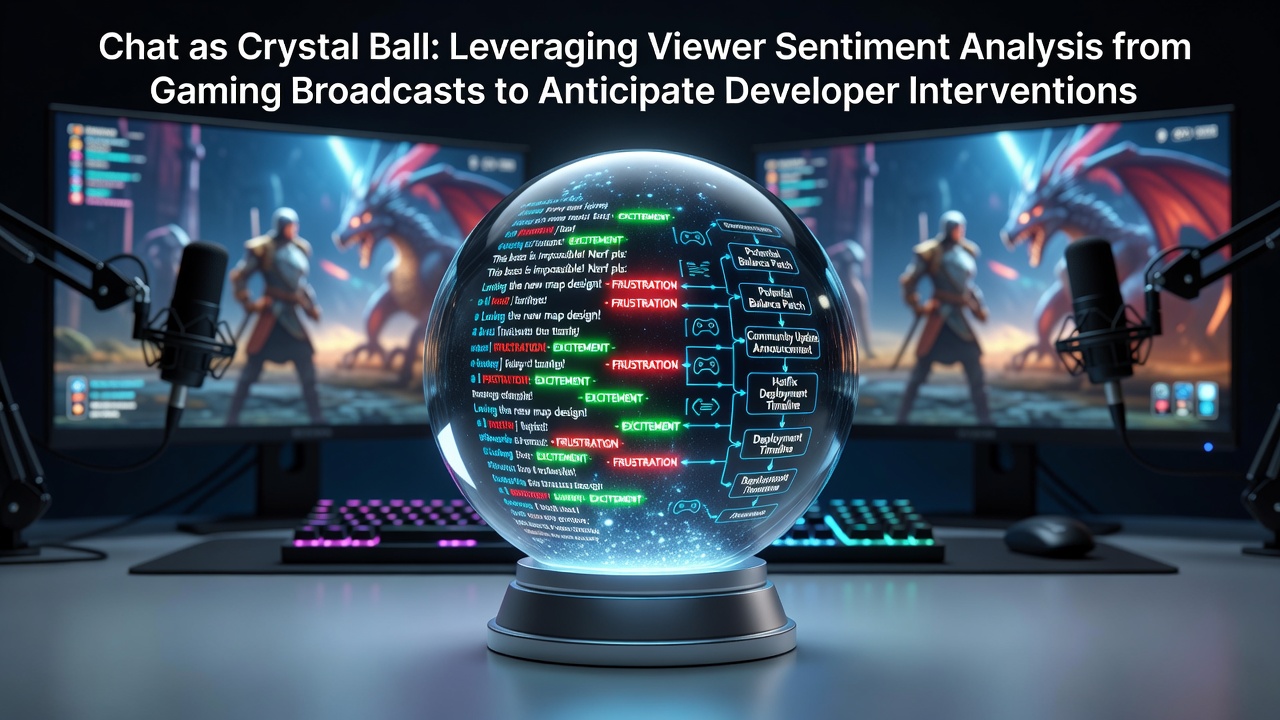
Chat as Crystal Ball: Leveraging Viewer Sentiment Analysis from Gaming Broadcasts to Anticipate Developer Interventions
Developers monitor live gaming broadcasts where viewer chat activity provides measurable indicators of player reactions to mechanics, balance issues, and new content releases, allowing teams to identify patterns that often precede formal patch announcements or feature adjustments. Research from institutions such as the University of Melbourne has documented how natural language processing tools parse thousands of messages per minute across platforms, converting expressions of frustration or enthusiasm into quantifiable sentiment scores that correlate with subsequent developer actions in titles like battle royales and MOBAs. Analysts track spikes in specific keywords and emoji usage during peak viewership hours, noting that sustained negative sentiment around weapon performance or map design frequently aligns with internal testing phases at studios. In July 2026 multiple major titles released mid-season updates following periods where chat logs from top broadcasts showed concentrated discussions on exploit mechanics, a trend tracked through aggregated data feeds rather than individual reports.Data Collection Methods in Live Streams
Broadcast platforms supply APIs that capture chat logs alongside view counts and engagement metrics, creating datasets that researchers combine with gameplay telemetry from the games themselves. Teams at organizations like the Entertainment Software Association compile anonymized examples from North American and European servers, revealing that viewer complaints about matchmaking times rise sharply before developers implement queue adjustments or region-specific server allocations. Processing pipelines filter out spam while preserving context from emotes and shorthand phrases common in gaming communities, which allows models to detect emerging issues such as economy imbalances in free-to-play titles. Studies published by Canadian research groups indicate that sentiment polarity shifts often appear in chat 48 to 72 hours before official forums receive comparable volumes of feedback, giving studios an earlier window for intervention planning.Case Examples Across Genres
One documented sequence occurred in a popular tactical shooter where chat sentiment around recoil patterns intensified during a weekend tournament stream, followed days later by a developer statement confirming an upcoming recoil overhaul. Observers note that similar sequences repeat across genres, including racing simulators where tire model complaints in live chat precede handling tweaks in patches. Another pattern appears in seasonal event games, where positive sentiment around limited-time modes correlates with extended event durations in later updates. Data from these interactions feeds into internal dashboards that flag thresholds for review, helping teams prioritize which community signals warrant engineering resources.