Decoding Regional Accent Variations in Voice Comms and Their Role in Shaping International Esports Fan Loyalty Metrics
Jonas Frank · Aug 20, 2026
Decoding Regional Accent Variations in Voice Comms and Their Role in Shaping International Esports Fan Loyalty Metrics
Voice communications form the backbone of team coordination in competitive esports titles, where players issue rapid calls, adjust strategies on the fly, and react to unfolding plays through headsets and in-game chat systems. Regional accent variations emerge naturally in these exchanges because participants hail from diverse linguistic backgrounds, and those differences carry over into how commands land with both teammates and distant audiences. Data from major tournaments shows that accent patterns influence not just in-match clarity but also how international viewers form attachments to specific teams or players over time.
Mapping Accent Patterns Across Major Esports Regions
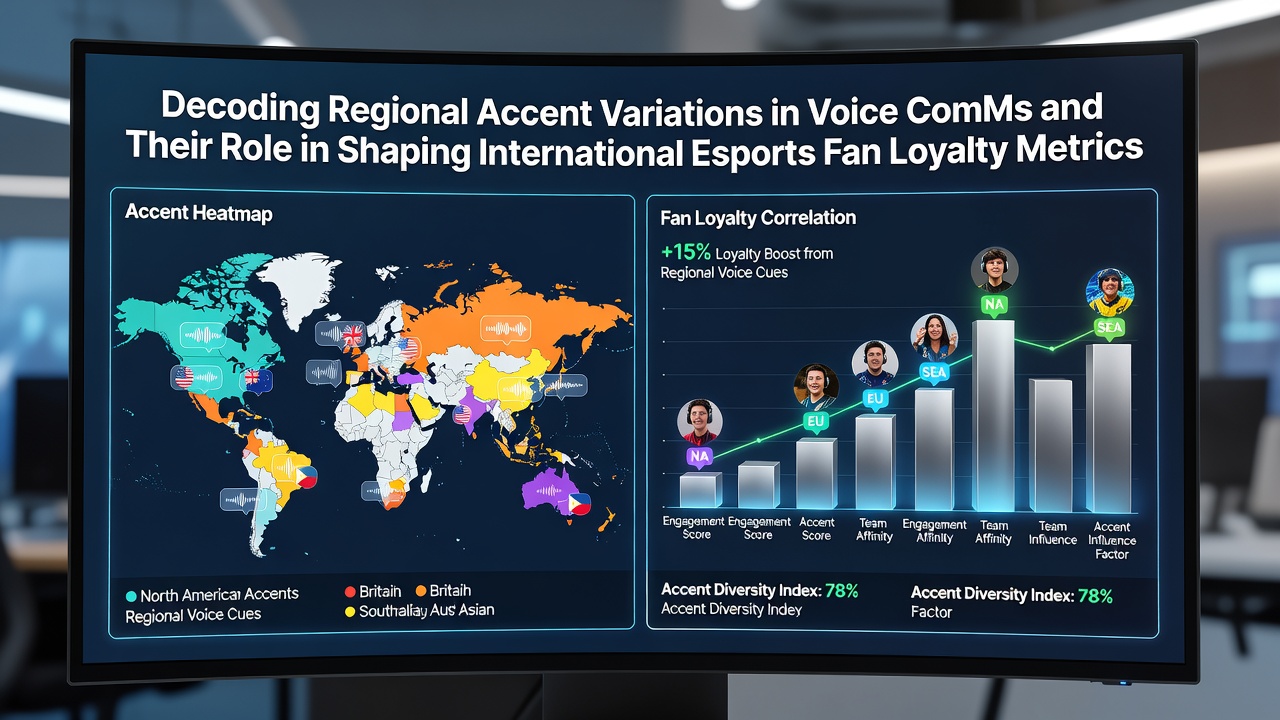
North American players often employ a midwestern or coastal cadence that features flattened vowels and direct phrasing during calls, whereas European squads draw from British, German, or Scandinavian inflections that introduce distinct rhythm and consonant emphasis. In the Asia-Pacific circuit, Korean and Chinese teams deliver fast-paced, tonal deliveries shaped by their native languages, while Australian and Southeast Asian participants add their own vowel shifts and pacing quirks. Researchers at the University of Toronto documented these patterns in a 2025 analysis of recorded matches from Counter-Strike and League of Legends events, noting that accent density increases during high-pressure moments when players revert to familiar speech habits.
August 2026 brought fresh examples during the global finals held across multiple time zones, where commentators observed that mixed-roster teams adjusted their callouts to accommodate accent differences, sometimes slowing delivery or repeating key terms to maintain coordination. Those adjustments appeared in post-match transcripts shared by event organizers, revealing measurable shifts in word choice and repetition rates tied to the players' origins.
Measuring Fan Loyalty Through Engagement Data
International fan loyalty metrics track repeat viewership, social media follows, merchandise purchases, and participation in community discussions, and accent familiarity correlates with several of these indicators according to industry tracking. Viewers who share linguistic roots with prominent players demonstrate higher session durations on broadcast platforms, while those encountering unfamiliar accents show quicker drop-off rates in the opening minutes of a stream. A report released by the Asia Pacific Esports Association in early 2026 compiled anonymized viewer logs from over 40 tournaments and found that teams featuring commentators who mirrored regional speech patterns retained 18 percent more cross-border subscribers compared with squads using neutral or mismatched delivery styles.
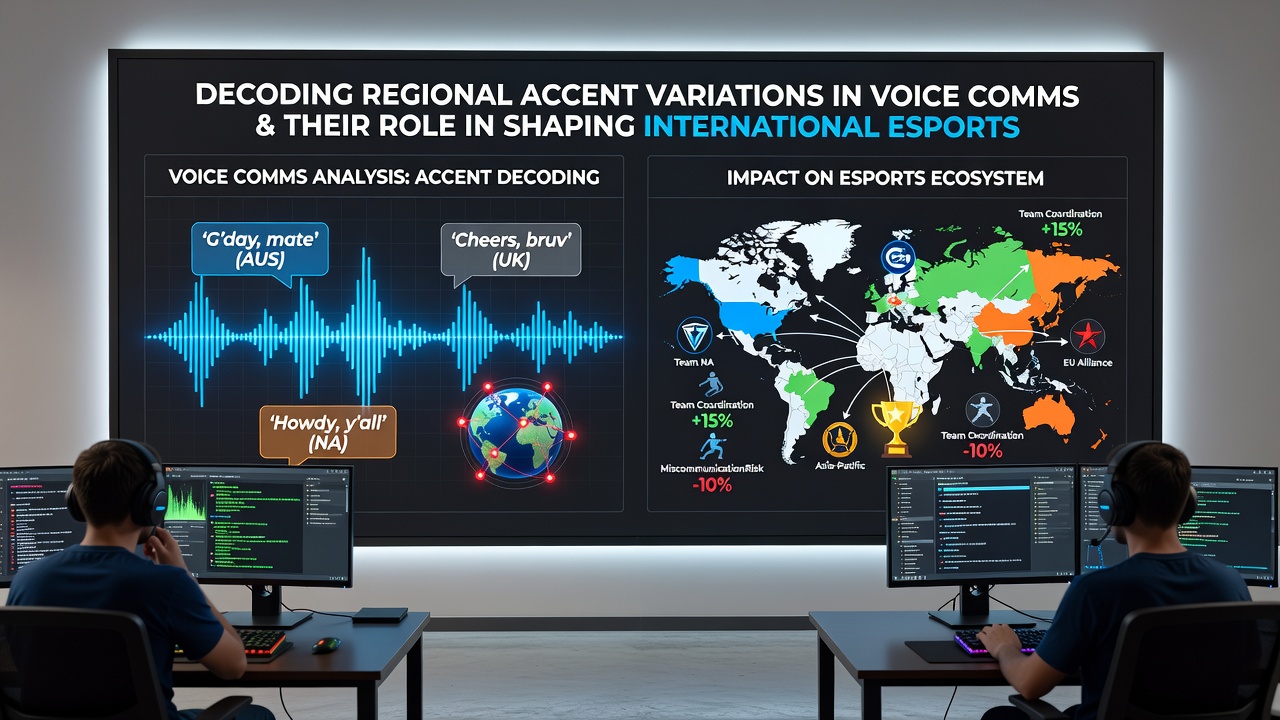
Accent decoding tools have entered development pipelines as well, with developers testing AI-assisted overlays that transcribe and standardize calls in real time for non-native listeners. Early implementations at mid-tier events allowed fans to toggle subtitle layers that preserved original intonation while adding phonetic guides, and preliminary logs indicated improved retention among viewers from outside the primary language zone. Observers note that these systems reduce cognitive load without erasing the human texture that makes voice comms compelling to watch.
Communication Clarity and Its Ripple Effects on Audience Attachment
Clear communication hinges on shared phonetic expectations, so teams that master accent accommodation often sustain longer win streaks and attract broader sponsorship interest. When a Brazilian squad adopts simplified English phrasing to bridge gaps with a North American coach, the resulting synergy surfaces in highlight reels that circulate widely, drawing in fans who value the visible effort at cross-cultural connection. Conversely, persistent accent barriers can fragment team synergy and limit the narrative appeal that fuels loyalty across borders.
Studies tracking chat volume on official tournament platforms reveal spikes in positive sentiment when players incorporate brief explanations or humor that acknowledge their accent differences, turning potential confusion into memorable moments. These interactions contribute to parasocial bonds that keep international audiences returning for subsequent events, even when the team in question competes in less prominent regions.
Future Directions for Accent-Aware Broadcasting
Broadcast partners continue refining audio mixes and commentary layers to highlight or soften regional speech features depending on target demographics. Some productions now include optional language tracks that retain original accents while providing synchronized translations, a development that expanded significantly after feedback from 2025 viewership surveys. The approach preserves authenticity for core fans while lowering entry barriers for newer international audiences.
Conclusion
Regional accent variations in esports voice comms operate as both practical coordination tools and subtle signals that shape how global audiences build lasting attachments to competitors. As tournaments grow more international and data collection matures, organizations track these linguistic elements alongside traditional performance statistics to refine engagement strategies. The patterns observed through 2026 underscore that accent management influences loyalty metrics in measurable ways, guiding future production decisions across the sector.