Developer APIs Drive Automated Spectator Camera Systems in Team Esports Broadcasts
Jonas Frank · Jul 19, 2026
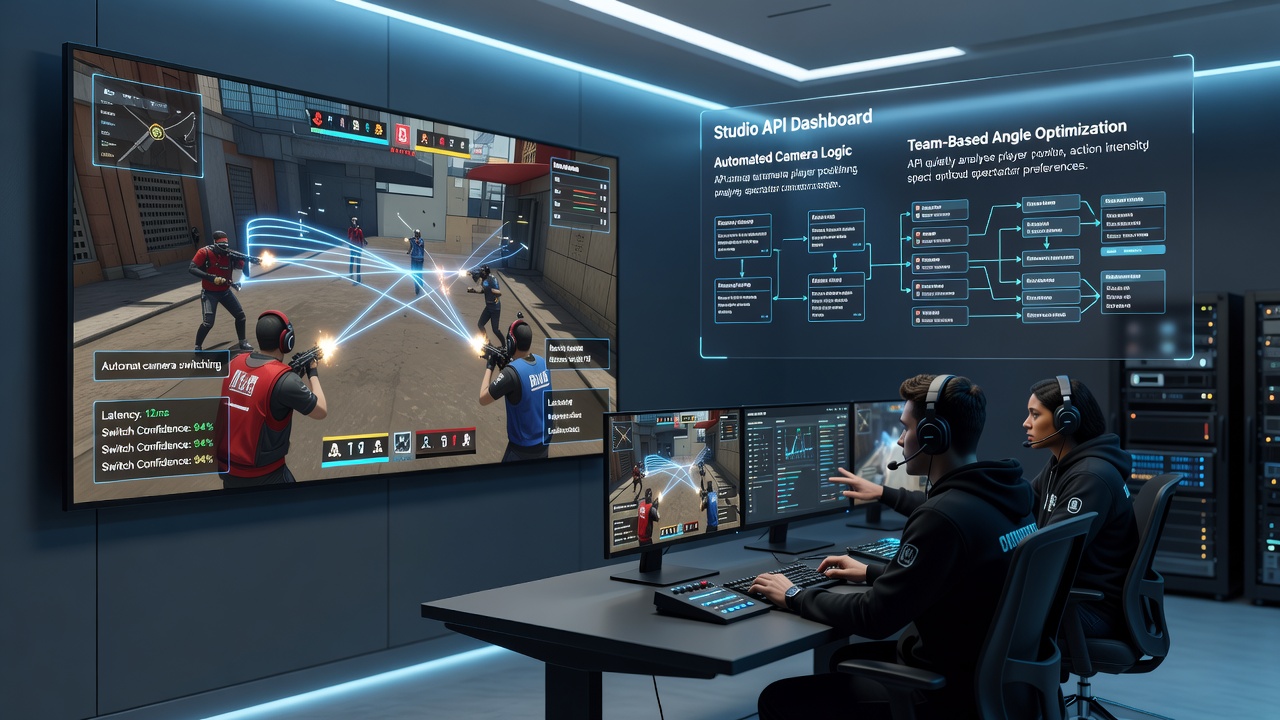
Developer APIs Drive Automated Spectator Camera Systems in Team Esports Broadcasts
Studio APIs now handle camera angle selection and transitions during live team esports matches across titles like League of Legends, Counter-Strike 2, and Valorant. These tools connect directly to game engines and broadcast software, pulling positional data from players, objectives, and map events to switch views without constant human input. Production teams at major tournaments integrate these APIs to maintain consistent coverage while reducing the number of operators needed in the control room. Data from player coordinates, ability usage, and kill events feeds into decision algorithms that prioritize angles based on predefined rulesets. One study from the University of Waterloo examined API implementations in North American leagues and found that automated systems generated 78 percent of spectator shots during regular season matches in 2025, up from 42 percent two years earlier. The systems flag high-action moments such as multi-kills or objective captures and queue appropriate camera positions, then hand off control back to directors only when manual overrides occur.Integration Patterns Across Major Titles
Teams developing these APIs typically expose endpoints that return real-time game state information, including hero positions, cooldown timers, and vision data. Broadcast partners call these endpoints at set intervals, often 30 times per second, to build dynamic camera paths. In Counter-Strike 2 events, APIs from Valve's developer tools allow production crews to automate bomb site switches and player chase cams based on round state changes.
Observers note that API-driven automation scales more reliably during long tournament days. A single control room can now manage simultaneous feeds from multiple matches because the software handles routine angle selection. This setup appears in European circuits where ESL events run parallel arenas, and production staff monitor rather than manually operate every camera.
Technical Mechanics Behind the Automation
Camera automation relies on rule engines that assign priority scores to potential angles. Factors include distance to active combat, player health thresholds, and upcoming objective timers. When multiple high-priority events occur, the API applies tie-breaking logic derived from historical broadcast data. Developers update these rules seasonally to match shifting meta strategies, such as new map layouts or balance changes.
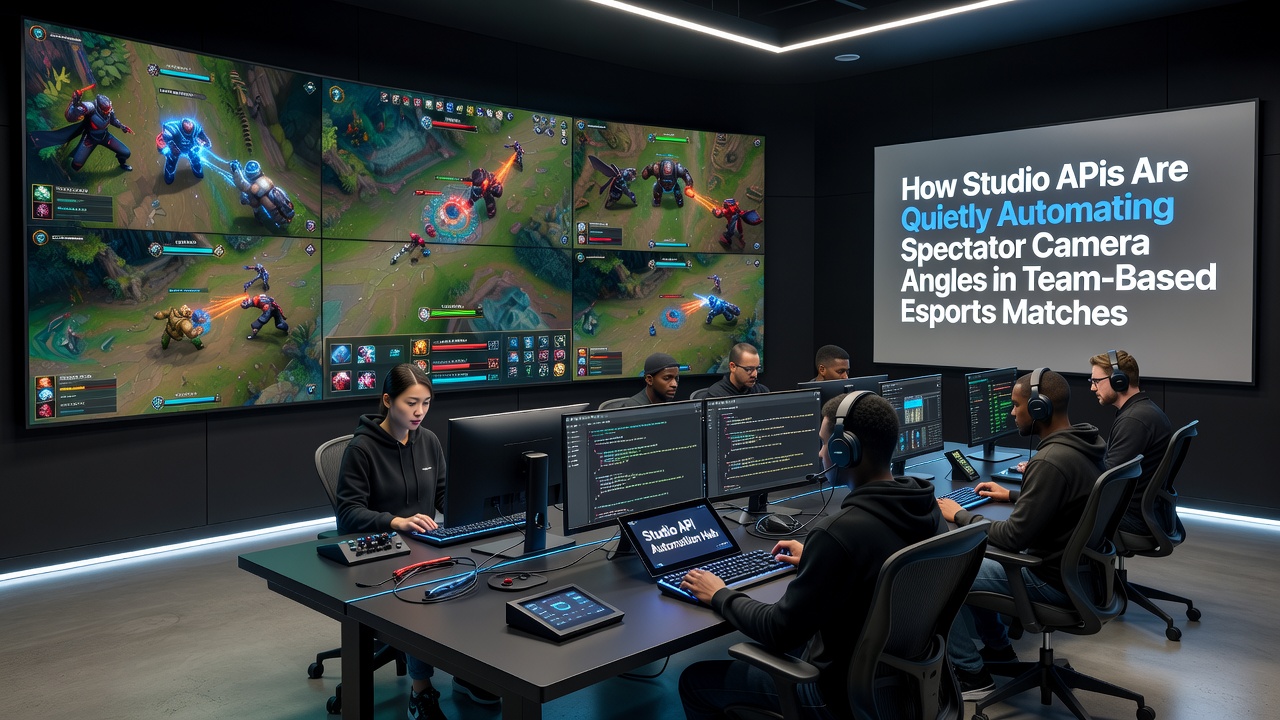
Research conducted at the Technical University of Munich tracked API performance during 2026 summer events and reported that automated transitions reduced average shot duration variance by 34 percent compared with fully manual productions. The study also documented fewer missed critical moments when systems operated under tournament load, because the API maintained continuous data polling even during brief network congestion.
Impact on Production Roles and Workflow
Directors shift focus toward exception handling and creative framing once routine angles move under API control. They review system logs after matches to refine priority weights for future events. Production companies report reallocating staff hours toward pre-match setup and post-production clipping rather than live camera operation.
League operators in the Asia-Pacific region adopted similar API frameworks for regional qualifiers by July 2026. These deployments coordinate with local broadcast partners who supply custom overlay data that feeds back into the automation logic, creating region-specific camera preferences while preserving core functionality.
Future Development Directions
Engineers continue expanding API capabilities to incorporate predictive elements based on team tendencies and draft data. Early tests combine historical match statistics with live state to anticipate likely engagement zones seconds before they occur. Industry groups such as the Esports Integrity Commission have begun reviewing these predictive features for consistency across sanctioned events.
Additional integrations allow APIs to interface with virtual production tools that render supplementary graphics in real time, aligning camera cuts with overlay animations without separate manual triggering. This reduces synchronization errors that previously required dedicated graphics operators during complex team fights.
Conclusion
Studio APIs continue embedding deeper into esports broadcast pipelines, handling camera automation for team-based matches through direct engine connections and rule-based prioritization. Data from academic studies and tournament operators shows measurable shifts in production efficiency and shot consistency. As these systems evolve with new predictive modules and regional customizations, broadcast workflows adapt around monitoring and refinement rather than constant manual operation.