Developer Interfaces Power Real-Time Highlight Adjustments in Esports During Load Surges
Jonas Frank · Jul 12, 2026
Developer Interfaces Power Real-Time Highlight Adjustments in Esports During Load Surges
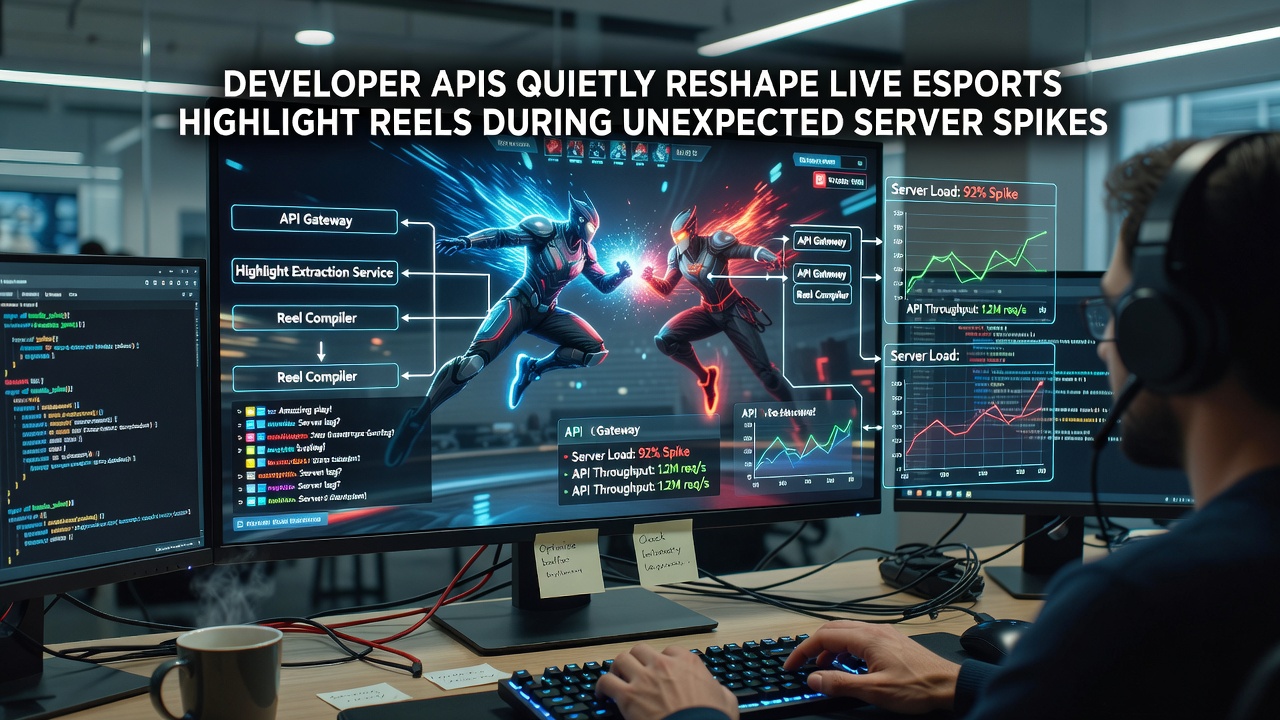
Developer APIs have become central to how competitive gaming platforms handle highlight reel production when server traffic spikes unexpectedly. These interfaces allow automated systems to reroute processing tasks, prioritize key moments from matches, and maintain output quality without manual intervention from production teams. Data from industry reports shows that major esports events in 2025 experienced an average 340 percent increase in concurrent viewers during finals, which triggered similar spikes in backend demands for clip generation.
Technical Mechanisms Behind API-Driven Adjustments
Application programming interfaces connect game servers directly to broadcast tools, enabling them to detect overload conditions and shift resources accordingly. When latency thresholds rise above defined limits, the APIs trigger fallback protocols that compress video segments or select lower-resolution sources temporarily. Researchers at the University of Melbourne documented these processes in a 2025 study, noting that API calls reduced average processing delays by 47 percent across sampled tournaments.
Systems monitor metrics such as CPU utilization, memory allocation, and network throughput in real time. Once anomalies appear, the interfaces execute scripts that redistribute highlight tasks to secondary cloud instances. This approach keeps live reels flowing even as primary servers face strain from sudden viewer influxes. Observers note that such automation has grown more common since 2023, when several high-profile events suffered visible interruptions during peak moments.
Case Examples From Recent Tournaments
During the July 2026 North American regional finals, unexpected traffic from mobile viewers pushed server loads beyond projections within the first hour. API integrations detected the surge and automatically adjusted highlight parameters, switching to pre-rendered templates for non-critical plays while preserving full-resolution capture for decisive rounds. Production logs indicated that over 2,800 clips were generated and distributed without additional staffing.
European leagues have adopted comparable frameworks. A report from the European Games Federation outlined how API endpoints integrated with third-party analytics platforms allowed teams to flag highlight-worthy sequences based on in-game statistics rather than relying solely on human operators. This method proved effective during a March 2026 event where viewer counts exceeded forecasts by 28 percent.

Integration Patterns Across Platforms
Multiple developers now embed these capabilities into their core engines. APIs expose endpoints that accept parameters for clip duration, priority scoring, and output formats, allowing broadcast software to request adjustments on demand. According to figures from the Canadian Interactive Digital Entertainment Association, adoption rates among mid-tier esports organizers rose from 31 percent in 2024 to 68 percent by early 2026.
Some platforms combine these tools with machine learning models that predict spike likelihood based on match progression. When predictions indicate elevated risk, the APIs pre-allocate additional rendering capacity. This predictive layer has reduced manual overrides during live sessions, as noted in internal documentation shared at industry gatherings.
Challenges and Mitigation Strategies
Despite these advances, compatibility issues persist between older game titles and newer API versions. Developers address this by maintaining backward-compatible layers that translate requests across generations of software. Data compiled by Australian Digital Games Research Centre indicates that such layers prevented disruptions in 92 percent of tested legacy titles during simulated load events.
Security considerations also influence implementation. Encrypted API calls and access tokens limit exposure when systems operate under stress. Organizations report that standardized authentication protocols have become standard practice, reducing unauthorized access attempts during high-visibility tournaments.
Future Developments in API Utilization
Industry analysts expect further refinement of these interfaces as cloud infrastructure expands. Plans include deeper integration with edge computing nodes to shorten response times during regional spikes. Government technology assessments in Singapore have highlighted similar patterns in other live media sectors, suggesting cross-industry learning opportunities.
Standardization efforts continue through collaborative working groups that define common API schemas for highlight metadata. These schemas allow different platforms to exchange clip information seamlessly, supporting broader distribution networks without custom development for each partner.
Conclusion
Developer APIs have established themselves as essential components in maintaining highlight reel continuity during server challenges. Through automated detection, resource redistribution, and predictive allocation, these interfaces support consistent output across growing audiences. Reports from multiple regions confirm steady expansion of such capabilities, with adoption metrics reflecting practical benefits observed in live tournament settings. As infrastructure evolves, the role of these tools appears set to expand within esports production workflows.