Echoes Across Servers: How Professional Stream Strategies Migrate Into Casual Multiplayer Communities Via Replay Archives
Jonas Frank · Aug 18, 2026
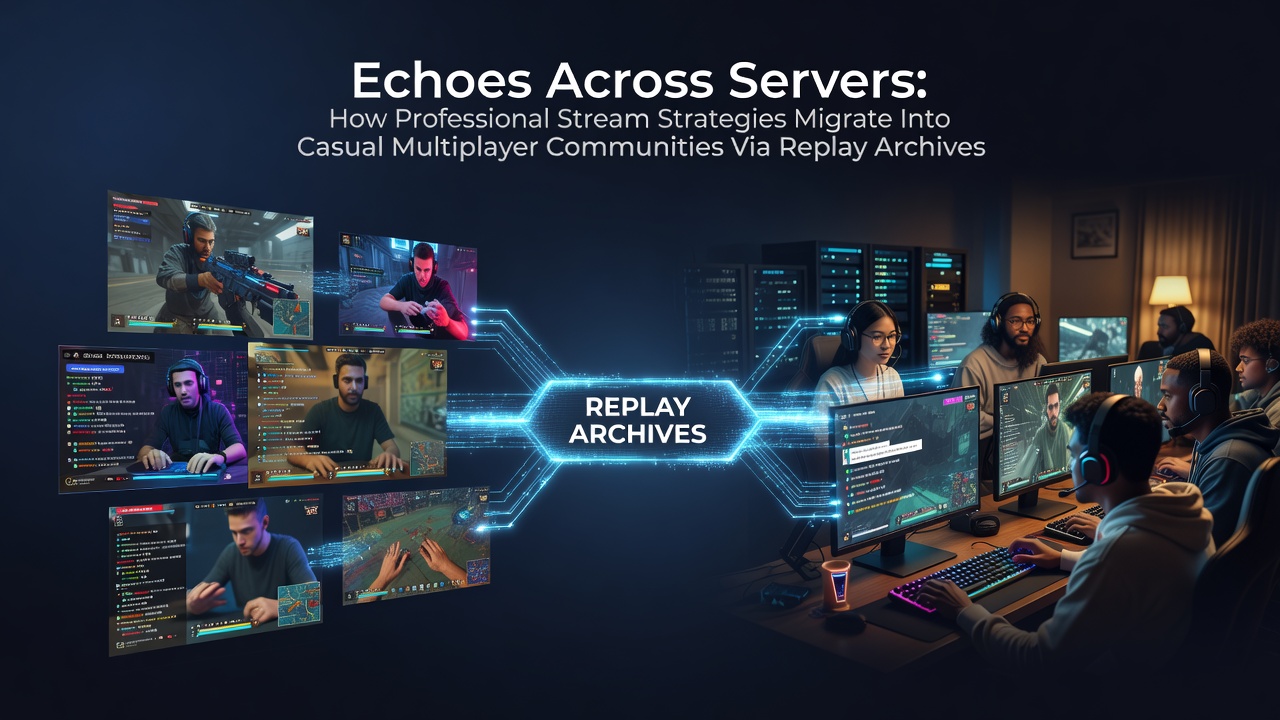
Echoes Across Servers: How Professional Stream Strategies Migrate Into Casual Multiplayer Communities Via Replay Archives
Professional esports broadcasts generate extensive replay archives that teams and individuals store on platforms such as Twitch and YouTube, and these collections now serve as primary resources for strategy transfer into casual multiplayer environments across numerous titles. Observers note that players in non-competitive settings frequently download or stream these recordings to study positioning, resource management, and team coordination patterns that originated in high-level matches. Data from platform analytics indicates steady growth in VOD viewership hours during off-peak periods, particularly in games with persistent servers and ranked systems.
Archive Accessibility and Initial Discovery
Replay archives accumulate through scheduled broadcasts and on-demand uploads, while search algorithms surface older sessions when users query specific map layouts or character combinations. Casual participants often encounter these materials via community forums or in-game leaderboards that link directly to highlighted moments, and researchers tracking usage patterns report that search volume for professional matches spikes after major patches or seasonal resets. Those who study community behavior find that players sort archives by duration and outcome metrics before committing time to full reviews, which accelerates the identification of repeatable tactics.
Technical Mechanisms Enabling Strategy Transfer
Modern replay systems embed timestamped event data alongside video streams, allowing viewers to pause, rewind, and overlay statistical layers that reveal decision trees behind each action. Developers integrate API endpoints that export these files into third-party analysis tools, and industry reports show increased adoption of such tools among amateur squads preparing for local tournaments. The process begins when a player identifies a segment from a professional archive, replicates the sequence in practice modes, then introduces it into live casual sessions where teammates adapt the approach on the fly. This migration accelerates because archives preserve both visual execution and contextual variables like economy states or ultimate ability timings.
Community Platforms and Knowledge Sharing
Discord servers, subreddit threads, and dedicated wiki pages function as distribution nodes where users post timestamps and annotations drawn from professional replays. Participants break down complex engagements into modular components, such as early-game rotations or defensive setups, then test modifications suited to smaller group sizes typical in casual play. Figures from academic studies on digital communities reveal that collaborative annotation increases retention of observed strategies compared with passive viewing alone. One documented case involved a group of players in a battle arena title who adapted a professional flanking route from archived footage, resulting in measurable win-rate improvements tracked over several weeks of matches.
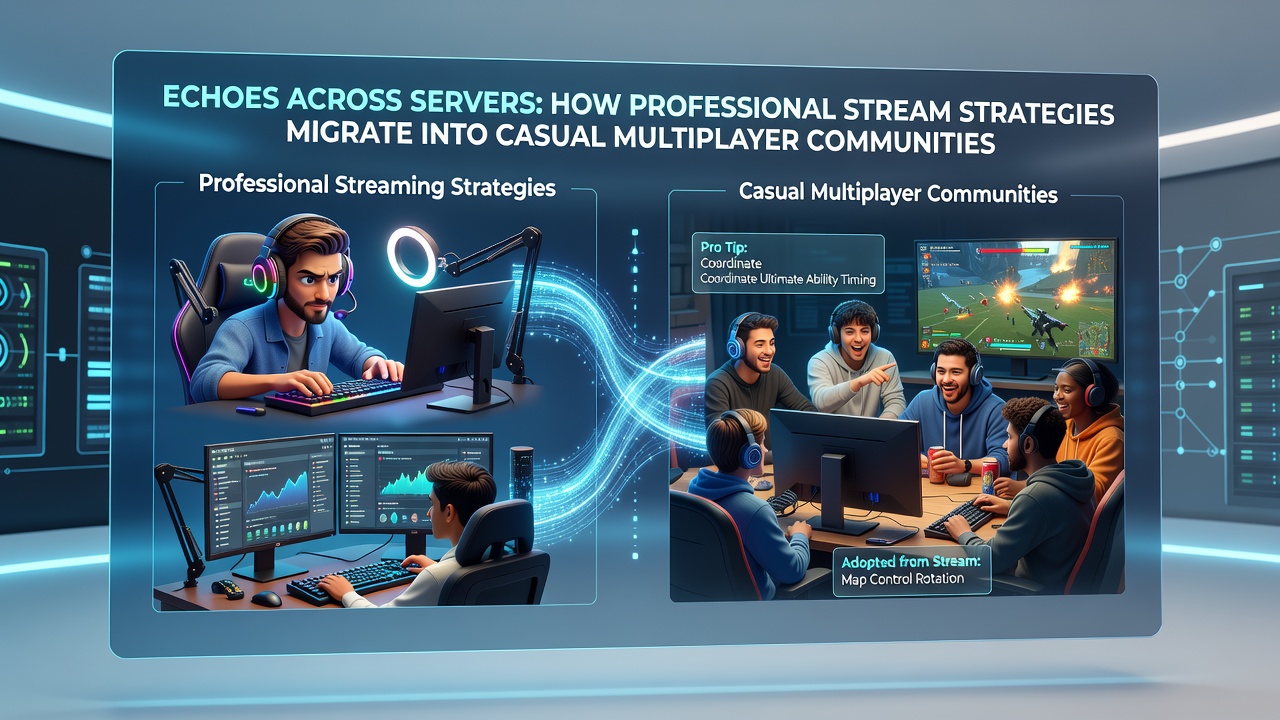
By August 2026, archive search features on major platforms had incorporated machine-learning tags for common strategy categories, which further lowered barriers for casual users seeking targeted examples. External data compiled by the Entertainment Software Association shows that multiplayer titles with robust replay ecosystems maintain higher monthly active user counts than comparable games lacking such tools. Observers tracking these trends note that regional differences appear in adoption speed, with European and North American communities demonstrating parallel but distinct preferences for particular archive formats.
Measurement of Migration Effects
Quantitative assessments rely on aggregated match data released by publishers alongside independent surveys conducted by research institutions. A report from the Canadian Institute for Digital Games Research documented correlations between archive access frequency and shifts in average player statistics within specific playlists. These shifts manifest as increased use of previously rare item builds or map control techniques that first appeared in professional contexts. The ball remains in the developers' court regarding how deeply they integrate archive-derived insights into matchmaking algorithms, yet current implementations already surface similar strategies across skill brackets without explicit player requests.
Challenges in Preservation and Accuracy
Version updates frequently render older replays incompatible, which fragments historical records and forces communities to rely on edited highlight compilations rather than complete matches. Storage costs and platform policies also influence which broadcasts remain available long-term, while casual players must cross-reference multiple sources to verify whether a tactic still functions under updated mechanics. Research indicates that communities mitigate these issues through crowdsourced patch notes and mirrored archives hosted on independent sites, preserving continuity even when official channels remove content.
Conclusion
Replay archives from professional streams continue to operate as conduits that carry tactical knowledge from competitive environments into casual multiplayer spaces, supported by technical infrastructure, community annotation practices, and measurable shifts in player behavior. Data across multiple regions confirms sustained engagement with these resources, while platform enhancements scheduled through 2026 aim to refine discovery and analysis features. The pattern persists because archives capture both successful outcomes and contextual variables that players can adapt, regardless of their own competitive level.