Physics Engine Mishaps Fuel Live Developer-Streamer Partnerships in Early Access Titles
Blake Reed · Jun 30, 2026
Physics Engine Mishaps Fuel Live Developer-Streamer Partnerships in Early Access Titles
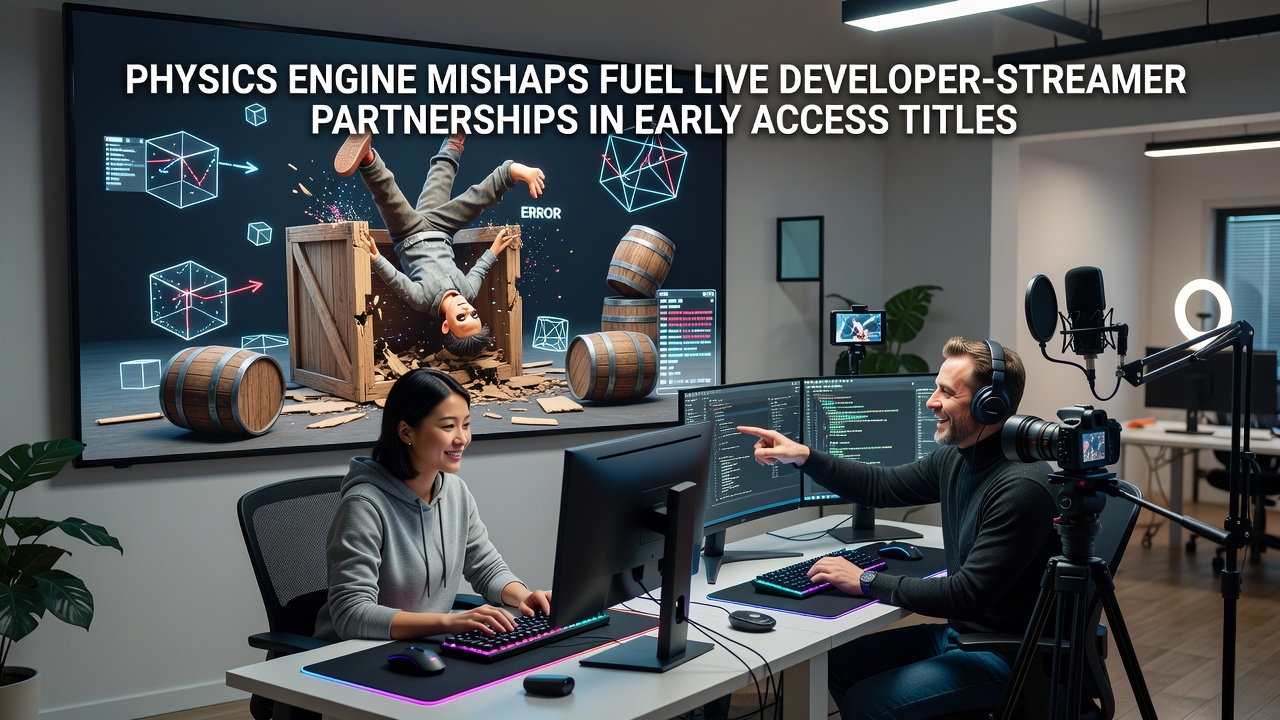
Early access titles often rely on complex physics engines that simulate object interactions, vehicle dynamics, and environmental responses, yet these systems frequently produce unexpected behaviors during public testing phases. Observers note that such mishaps generate spontaneous viral moments when streamers broadcast gameplay, drawing attention from developers who recognize the value in real-time feedback loops created by live audiences.
Mechanics Behind Common Physics Issues
Physics engines in games built with tools like Unity or Unreal Engine process calculations for gravity, collisions, and ragdoll effects at high speeds, but incomplete optimizations lead to glitches such as objects clipping through surfaces or characters achieving unintended velocities. Data from industry reports shows these occurrences spike in early access because developers release builds with partial feature sets to gather community input, and figures from the Interactive Software Federation of Europe indicate that over 60 percent of early access projects encounter physics-related bugs within the first three months of launch.
Streamers capture these events in real time, transforming technical errors into content that attracts viewers through sheer unpredictability, while developers monitor chat reactions and replay clips to identify patterns that internal testing missed.
Partnership Models Emerging from Glitch Exposure
Developers have formed direct collaborations with select streamers, granting them access to private test servers or custom debug tools in exchange for structured reporting during live sessions. In June 2026 several mid-sized studios announced formal agreements where streamers receive compensation for highlighting reproducible physics anomalies, allowing teams to prioritize fixes based on frequency and severity documented across multiple broadcasts.
These arrangements differ from traditional influencer deals because they emphasize technical validation over promotional reach, and researchers at the University of Waterloo documented similar patterns in Canadian-developed titles where live data streams accelerated bug resolution timelines by an average of 18 days compared to standard feedback channels.
Case Examples Across Genres
Vehicle-based survival games frequently exhibit wheel detachment or terrain deformation errors that streamers demonstrate by attempting increasingly elaborate stunts, resulting in footage that circulates on platforms and prompts immediate developer responses. One title released an update within 48 hours after a coordinated stream event revealed a consistent floating object issue tied to specific load conditions.
Multiplayer physics sandboxes see characters phase through walls during high-interaction moments, and partnerships allow developers to embed telemetry overlays visible only to partnered streamers, enabling precise logging of conditions that trigger the mishaps without disrupting the broadcast flow.
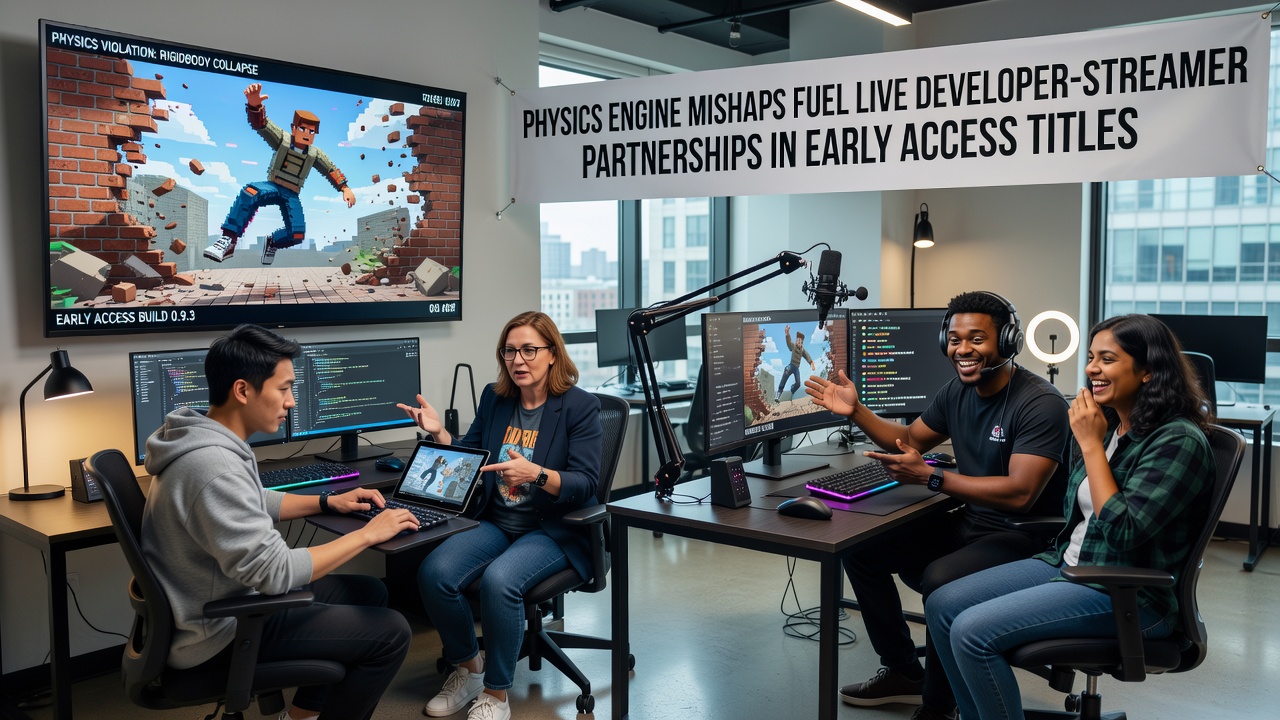
Academic studies on game development pipelines confirm that integrating external observers through live platforms reduces the iteration cycle for physics subsystems, particularly when audience volume increases the likelihood of edge-case discovery.
Industry Data and Adoption Trends
Reports compiled by the Entertainment Software Association track a rise in developer-streamer technical partnerships, noting that titles employing such models in 2025-2026 showed higher retention rates post-patch compared to those relying solely on internal QA. The pattern holds across regions, with European and North American studios adopting variations suited to local regulatory environments around software testing disclosures.
Stream platforms have introduced analytics features that flag recurring physics events automatically, supplying aggregated data to partnered developers who use it to refine simulation parameters before wider releases.
Future Implications for Early Access Pipelines
Continued refinement of these partnerships suggests that physics engine validation will incorporate live audience participation as a standard phase, shifting some quality assurance responsibilities to external collaborators equipped with streaming infrastructure. Industry organizations such as the International Game Developers Association have begun publishing guidelines on managing data shared during such sessions to maintain security while preserving transparency.
Those who've studied early access ecosystems observe that the feedback density from live streams provides statistical power that isolated bug reports cannot match, leading to more robust simulation layers in subsequent updates.
Conclusion
Physics engine mishaps in early access titles create natural opportunities for developer-streamer partnerships that accelerate issue identification and resolution through shared live testing environments. Evidence from multiple regions and organizations demonstrates measurable improvements in development efficiency when these collaborations are structured around technical reporting rather than purely promotional goals, establishing a model that continues to evolve alongside streaming platform capabilities.