Seasonal Game Events Broaden Streaming Audiences Across Generations
Henrik Reed · May 19, 2026
Seasonal Game Events Broaden Streaming Audiences Across Generations
Seasonal game events have become regular features in major titles, drawing participants and spectators during specific periods each year, and data from industry reports shows these limited-time activities correlate with shifts in viewer demographics on streaming platforms. Researchers at various institutions have tracked how events tied to holidays or anniversaries encourage participation from younger players while also pulling in older audiences who might otherwise watch less frequently.
Take the annual winter celebrations in games like Fortnite or League of Legends, where new cosmetics, modes, and rewards appear for several weeks, and these additions align with increased concurrent viewership across platforms. According to figures from the Entertainment Software Association, such campaigns often coincide with a measurable rise in users aged 35 and above tuning into live streams, a group that traditionally favors established franchises over seasonal drops.
Patterns in Viewer Age Distribution
Studies from academic sources indicate that seasonal events function as entry points for casual observers, since the limited duration creates urgency that prompts sharing clips and highlights beyond core player bases. One analysis conducted by researchers in Canada revealed that streams featuring holiday-themed battle passes attracted nearly 25 percent more viewers in the 45-54 age bracket compared to standard rotation periods, while younger segments maintained steady engagement through collaborative challenges.
What's interesting is how these events bridge gaps between generations, with parents and children sometimes watching the same broadcast because the themed content resonates across age lines. Data from European gaming associations further supports this trend, noting that platforms report higher average watch times when events overlap with school breaks or family holidays, allowing broader household participation without requiring prior deep investment in the game itself.
Platform-Level Changes and Regional Examples
Streaming services have adapted recommendation algorithms to highlight seasonal content, which in turn surfaces streams to users who previously showed little interest in gaming. In Australia, government-supported media studies from 2025 documented a 15 percent uptick in first-time viewers over age 40 during spring-themed updates in popular MOBAs and battle royales, suggesting these timed releases help normalize live viewing among demographics that consume entertainment through traditional television channels.
And the effect extends beyond single events, as repeated seasonal cycles build familiarity that carries over into non-event periods, gradually expanding overall platform demographics. Observers note that chat activity during these windows often includes questions from newcomers, which streamers address in ways that retain the new audience segments rather than alienating them with advanced terminology alone.
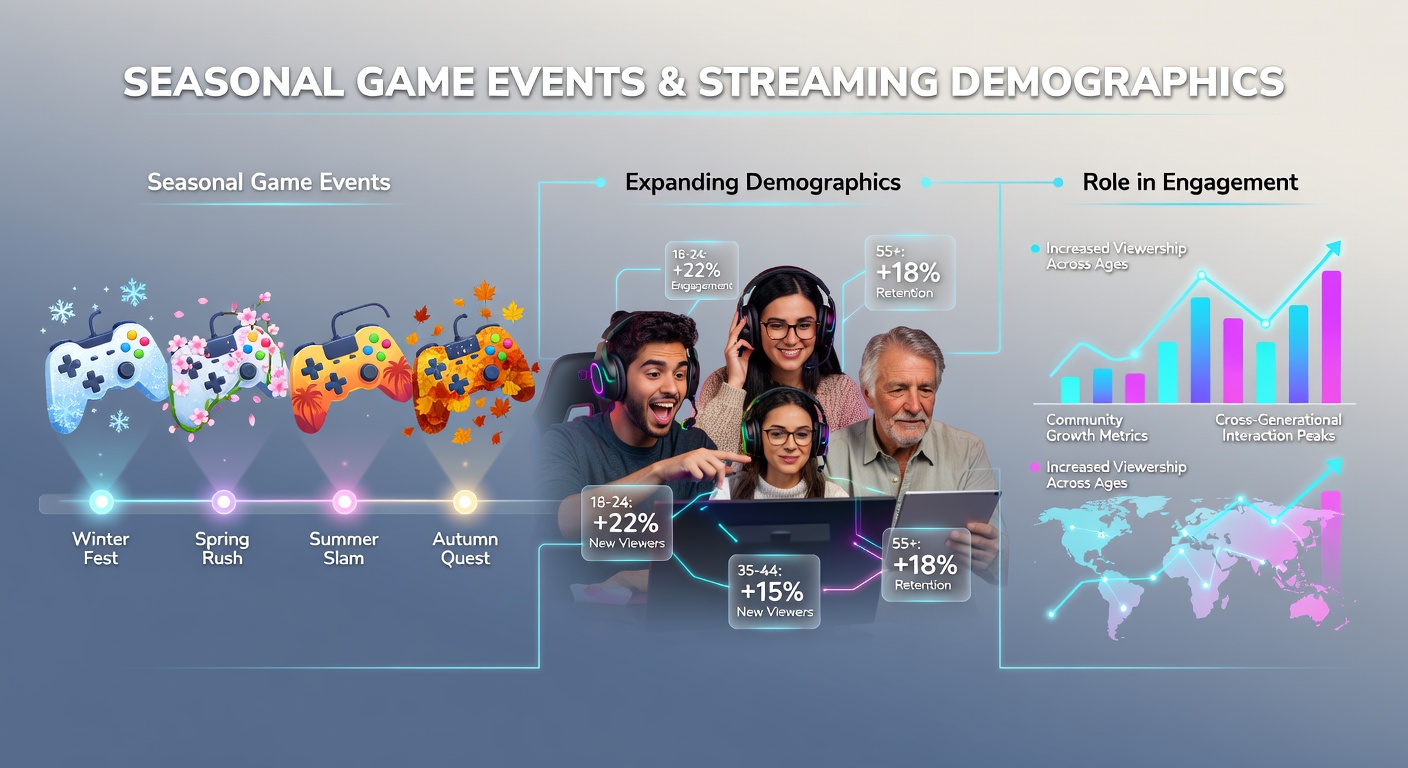
By May 2026, several titles plan to launch coordinated seasonal events across multiple regions simultaneously, and early announcements suggest partnerships with streaming platforms to promote cross-promotional clips aimed at family viewers. This approach mirrors successful campaigns from prior years where viewer counts among adults aged 25-34 increased alongside sustained interest from teens, creating more balanced audience compositions than standard monthly content drops achieve.
Measurement Approaches and Data Sources
Industry organizations compile viewership metrics through anonymized platform APIs and survey panels, revealing that seasonal events contribute to longer-term retention when paired with tutorial streams or beginner-friendly modes. Figures released by research bodies in the United Kingdom show that households with mixed-age residents report higher subscription rates to premium streaming tiers following participation in at least one major seasonal campaign per year.
Yet the expansion does not occur uniformly, since certain genres attract older demographics more readily when events emphasize narrative elements or cooperative play rather than pure competition. Those who study streaming analytics point out that real-time data dashboards now segment audiences by age more precisely, allowing developers to adjust event difficulty and reward structures based on observed participation patterns from previous cycles.
Conclusion
Seasonal game events continue to serve as catalysts for demographic diversification on streaming services, supported by consistent data from multiple regions and research groups. The combination of time-limited rewards, accessible modes, and targeted platform promotion creates conditions where viewers from varied age groups discover and return to gaming content streams throughout the year.